Profoundly dyslexic man self-publishes his book using AI
Graeme is a battler. He had a tough time at school because he could neither spell, read nor write. It was out of the question that he might write books later in life. But he did. He needed help with the first three, but his latest book was created solely by him, using AI (and a local printer).

The front page banner headline on the Greymouth Star newspaper. Graeme to the left.
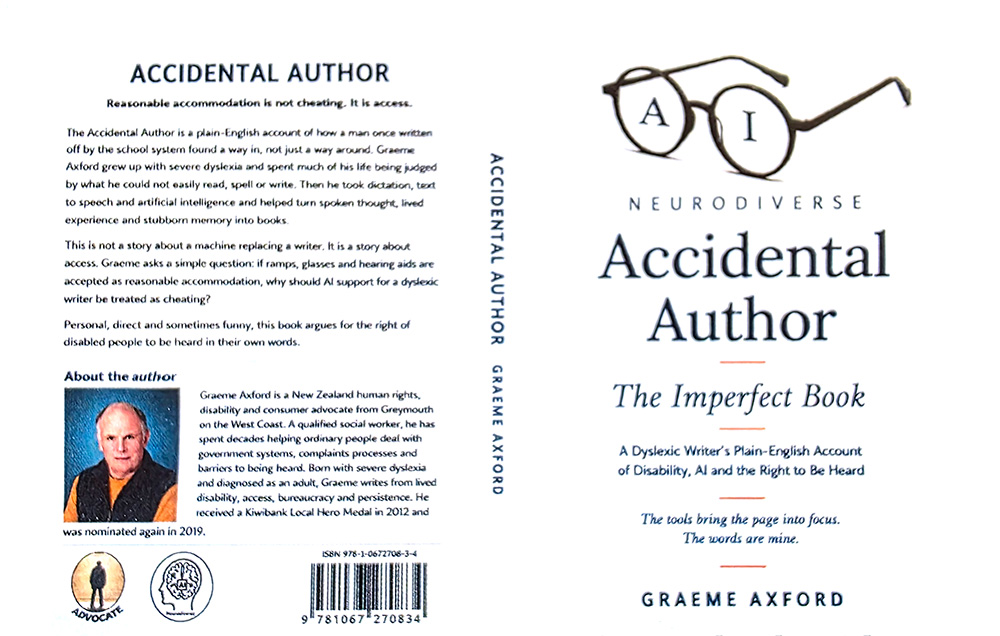
Above: Graeme's last book (2026) Accidental Author - a dyslexic writer's plain-English account of disability, AI and the right to be heard.
Graeme's first book - Differently Abled was written with the help of local agencies. For his second and third books he approached BriarBooks to help him self-publish a supervised ghostwritten manuscript and other material he had worked into chapters using assistive technology, (ie., computer programs that turn speech into text and read text back). He produced his front covers using AI, and BriarsBooks added back covers and adjusted everything to work at A5 size @ 300 dots per inch (commercial printing resolution) (see images below).
But - as a disability campaigner and social worker - he wanted to show what people with disabilities were capable of doing using AI, and he wanted Accidental Author to be the evidence.
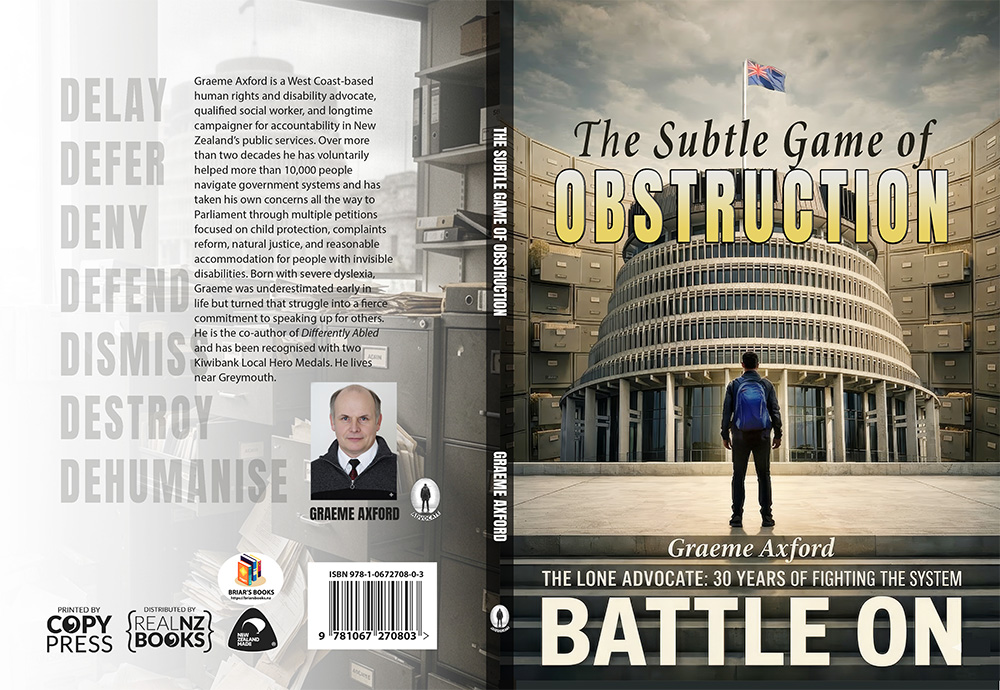
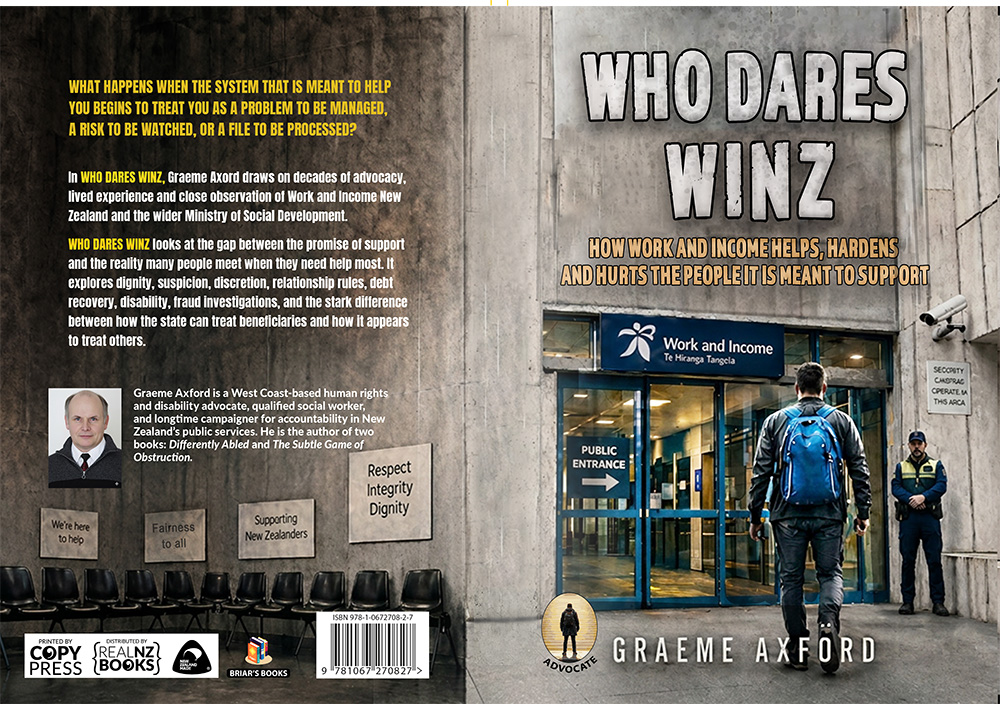
Graeme has become well-known to New Zealand bureaucracies as an accountability watchdog and an advocate for 1000s of people having difficulties with the system. He has a sharp mind and thinks quickly on his feet in courts and tribunals.
His books are carefully referenced using the government's own reports and findings, and lived experience - his own and thousands of his clients whom he helps voluntarily and who are unable to pay him.
How did he do it?
As an experienced user of assistive technology Graeme just added AI into the mix. He mainly worked with Claude, having found Chat GPT was not up to the task, ie., it failed to generate an index with accurate page references. Following his written instructions AI helped him sharpen his arguments, correct his grammar, remove duplication, organise his material better and structurally create the book at A5 size with all front matters, Table of Contents, page numbering, running headers and correct margins, etc. It also (very cleverly) created a working index, ie., it looked for words and phrases that readers might search for and referenced them to correct pages. It could also be instructed to create references and bibliographies in common citation styles.
He used AI to create the front and back covers with ISBN numbers, his photo and blurb and author's bio.
Graeme calls it The Imperfect Book and it is. If he wants to submit it to Kindle as an e-book it will have to be converted to web code and his Table of Contents and index would have to be dismantled and re-coded. It could be submitted to Kindle print-on-demand as it is, however.
And who knows? Before too long AI might be creating kindle e-books for Amazon.
In the meantime Graeme is happy to champion the rights of the Neurodiverse community and is wholly in favour of AI for the help and hope it gives people with disabilities.